


Custom Cabinetry vs. Prefab RTA Cabinets
Choosing the right kitchen cabinets is one of the most important decisions in a kitchen remodeling project. Cabinets influence the appearance of the room, the amount of available storage, and how well the kitchen functions every day. With options ranging from ready-to-assemble (RTA) cabinets to fully custom cabinetry, homeowners must balance budget, materials, design flexibility, and long-term durability.
At Losgatos Builders, careful material selection and thoughtful design help homeowners make informed remodeling decisions. Whether you are updating an existing kitchen or planning a complete renovation, understanding the differences between custom, prefabricated, and semi-custom cabinets can help you choose an option that fits your home and lifestyle.
Understanding Custom Cabinetry vs. Prefab Cabinets
The main difference between custom and prefabricated cabinetry is how the cabinets are designed, manufactured, and fitted to a space.
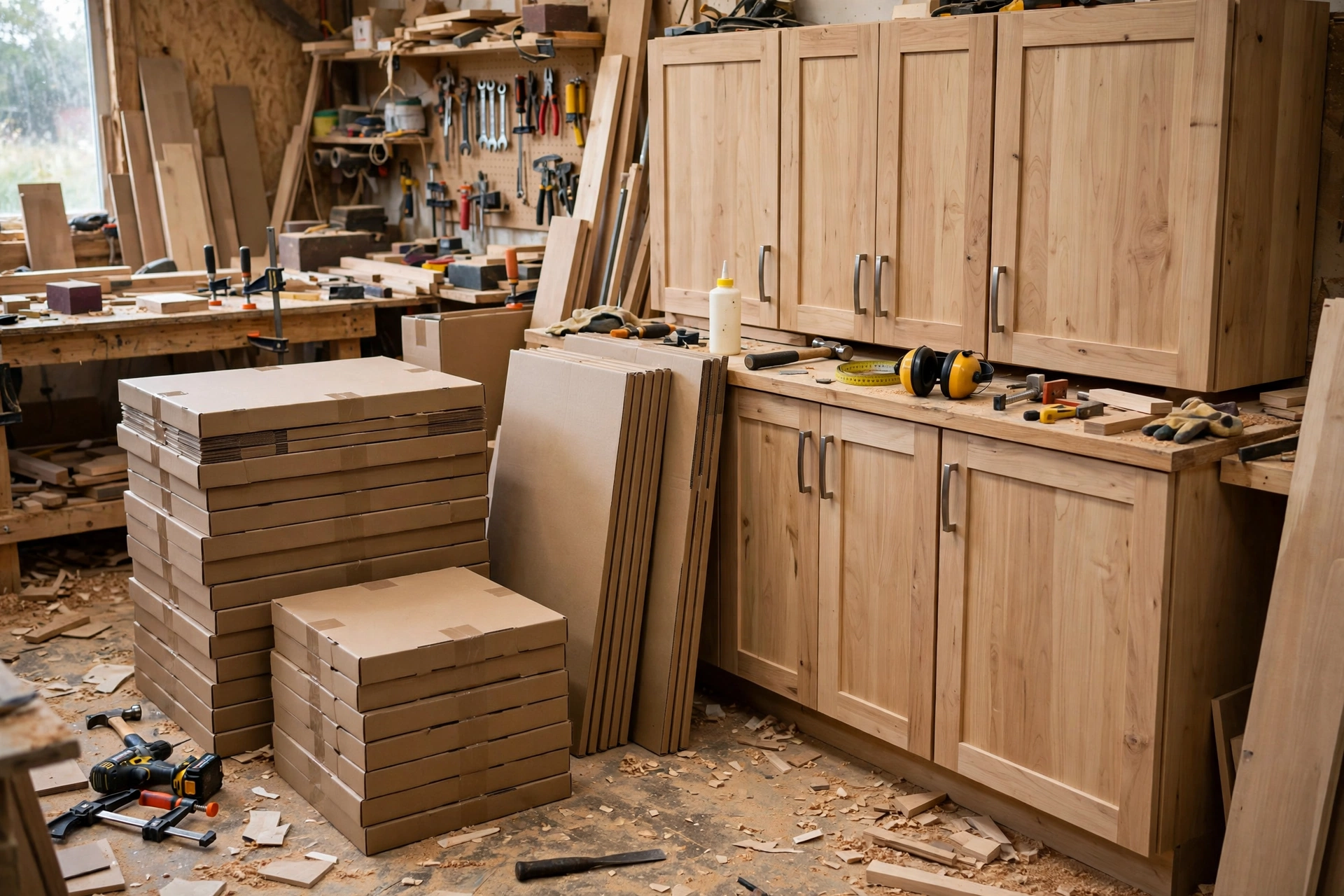
Custom cabinetry is built to meet specific measurements, storage requirements, and design preferences. Prefabricated cabinets are manufactured in standard sizes and configurations, while ready-to-assemble cabinets are shipped as components that are assembled before installation.
What Are Custom Kitchen Cabinets?
Custom kitchen cabinets are designed around the dimensions and requirements of a particular kitchen. Homeowners can often select cabinet depths, widths, finishes, door styles, interior storage features, and decorative details.
This flexibility can be especially useful in kitchens with unusual dimensions, sloped ceilings, limited wall space, or specific storage requirements.
Custom cabinetry may also provide more opportunities to coordinate cabinetry with built-in appliances, kitchen islands, pantry systems, and architectural features.
What Are Prefabricated and RTA Cabinets?
Prefabricated cabinets are produced in standard sizes and styles. They are generally available in established configurations, allowing homeowners to select from existing product ranges rather than developing every cabinet from scratch.
Ready-to-assemble cabinets are a type of prefabricated cabinetry supplied in separate components. The purchaser or installer assembles the cabinets before fitting them into the kitchen.
These options can reduce manufacturing costs and may offer shorter lead times when the required styles and sizes are readily available. However, installation quality, material specifications, and product construction vary between manufacturers.
What Are Semi-Custom Cabinets?
Semi-custom cabinetry sits between standard prefabricated and fully custom options. Manufacturers offer established cabinet designs but may allow selected modifications, such as changes to dimensions, finishes, door styles, or storage features.
For homeowners who want more flexibility than standard cabinets provide without the full cost of custom manufacturing, semi-custom cabinetry can be a practical compromise.
Comparing Cabinet Materials: Solid Wood vs. Particle Board
Cabinet construction has a major influence on durability, appearance, and maintenance. The material used for the cabinet box, doors, drawer fronts, and shelves can differ even within the same product.
Solid Wood Cabinet Components
Solid wood is commonly used for cabinet doors, drawer fronts, face frames, and selected structural components. Popular species include maple, oak, cherry, and other hardwoods.
Potential advantages include a natural appearance, the ability to accept certain stains and finishes, and repair options for some types of damage.
However, solid wood expands and contracts as humidity changes. Its performance depends on the species, construction methods, finish, and environmental conditions. Solid wood is not automatically superior for every cabinet component, particularly where dimensional stability is important.
Particle Board and Engineered Wood
Particle board is manufactured from wood particles bonded together with adhesive. It is commonly used in some cabinet boxes, shelves, and furniture components, often with a laminate or melamine surface.
Quality particle board can perform well in suitable indoor applications when properly manufactured, protected from moisture, and supported correctly. However, prolonged water exposure can cause swelling or deterioration, particularly at damaged edges and unsealed openings.
Other engineered materials, including medium-density fiberboard (MDF) and plywood, offer different performance characteristics. Plywood is often selected for cabinet boxes because of its layered construction, while MDF is frequently used for painted door components because of its smooth surface.
Which Cabinet Box Material Is Best?
The best choice depends on the cabinet’s intended use, construction quality, budget, and exposure to moisture. A well-built cabinet made from suitable engineered material can outperform a poorly assembled cabinet made with solid wood.
When comparing products, examine the cabinet-box material, back-panel construction, shelf support, edge treatment, joinery, and protection around sinks or other moisture-prone areas.
Custom Kitchen Cabinets Cost: What Influences the Price?
The cost of custom kitchen cabinets depends on the kitchen’s size, cabinet configuration, material selection, finish, hardware, and installation complexity.
Custom cabinetry generally involves more design and manufacturing work than standard RTA cabinets. However, the difference in cost varies according to the products being compared.
Factors That Affect Cabinet Pricing
Important cost considerations include:
Cabinet dimensions: Unusual sizes and configurations may require additional manufacturing work.
Materials: Solid wood, plywood, MDF, and particle board have different material and performance characteristics.
Door styles: Shaker, slab, raised-panel, and decorative designs may have different production costs.
Finishes: Painted, stained, glazed, and specialty finishes involve different preparation and application processes.
Hardware: Hinges, drawer slides, pull-out organizers, and specialty storage systems affect the overall price.
Installation: Leveling, scribing, fitting panels, and adjusting doors require skilled labor.
Additional features: Appliance panels, integrated lighting, pantry systems, and custom islands can increase the project budget.
How to Compare Estimates Fairly
When reviewing cabinetry proposals, make sure each estimate includes comparable materials, hardware, finishes, accessories, and installation services.
One estimate may cover only the cabinet boxes and doors, while another includes delivery, installation, fillers, decorative panels, and finished end panels. Comparing the final totals without reviewing these details can be misleading.
Homeowners should also account for countertop installation, plumbing changes, electrical work, backsplash materials, and other costs that may fall outside the cabinet supplier’s proposal.
Cabinet Hardware: Soft-Close Hinges and Drawer Slides
Hardware affects how cabinets feel during everyday use. Hinges, drawer slides, and opening mechanisms determine how smoothly doors and drawers operate and how well they perform over time.
The Benefits of Soft-Close Hardware
Soft-close systems slow a door or drawer near the end of its movement, helping prevent it from slamming shut. This can reduce noise and make the kitchen feel more refined.
Brands such as Blum offer cabinet hardware systems that may include concealed hinges, drawer runners, and soft-close mechanisms. Product performance depends on the specific hardware series, correct installation, cabinet construction, and adjustment.
Is Premium Hardware Worth the Investment?
Higher-quality hardware can be worthwhile for frequently used drawers, heavy storage units, and cabinets that need smooth operation over many years.
However, the brand name alone does not determine the quality of an entire cabinet. Homeowners should consider load ratings, adjustment options, replacement-part availability, warranties, and compatibility with the cabinet design.
Dovetailed Drawer Construction and Cabinet Durability
Drawer construction is another important consideration when comparing custom cabinetry with prefabricated options.
What Are Dovetailed Drawers?
Dovetail joints connect two pieces of wood using interlocking, angled shapes. The joint is commonly used at the corners of quality wooden drawers because it provides mechanical resistance to the pieces pulling apart.
Dovetailed drawers are often associated with traditional craftsmanship and durable construction.
However, a dovetail joint does not guarantee that every part of the drawer is well made. The drawer bottom, material thickness, slide system, assembly accuracy, and finish also influence performance.
Comparing Different Drawer Construction Methods
Cabinet drawers may use dovetail joints, dowels, screws, staples, or other assembly methods. Each approach can perform differently depending on the materials and manufacturing quality.
A well-designed drawer should open smoothly, remain square, support its intended load, and resist repeated daily use.
When evaluating cabinets, ask about the drawer-box material, joinery method, bottom-panel construction, slide specifications, and available replacement components.
Custom Paint Finishes vs. Factory Finishes
Cabinet finishes influence both the appearance of a kitchen and the maintenance it requires.
Custom Paint Finishes
Custom-painted cabinets allow homeowners to choose colors that coordinate with countertops, flooring, wall colors, and lighting. They can also help create a cohesive design across kitchen islands, perimeter cabinets, and built-in storage.
A durable result depends on proper surface preparation, compatible primers and coatings, controlled application conditions, and adequate curing time.
Painted finishes can chip or scratch, particularly around frequently used doors and drawer edges. Touch-ups may be possible, although matching an aged or custom color can be difficult.
Factory-Applied Finishes
Factory finishes are applied under controlled manufacturing conditions and may provide consistent coverage across multiple cabinet components.
Available options vary by manufacturer and may include painted surfaces, stains, laminates, veneers, or thermally fused finishes.
A factory finish is not automatically more durable than a custom finish. The coating system, substrate, manufacturing process, and installation environment all matter.
Choosing a Finish for Your Kitchen
Consider how much use the kitchen receives, how often surfaces will need cleaning, and whether the desired appearance depends on visible wood grain or a uniform painted surface.
Request samples when possible and review the manufacturer’s care instructions before making a final selection.
Custom vs. Semi-Custom vs. RTA Cabinets: Which Should You Choose?
Each cabinet category can suit a different remodeling goal.
Custom Cabinetry for Unique Spaces
Custom cabinets may be appropriate when exact dimensions, specialized storage, integrated architectural details, or unusual room layouts are priorities.
They can help maximize storage in kitchens with awkward corners or limited space. However, design development and manufacturing may require more time, and changes after production begins can be expensive.
Semi-Custom Cabinets for Design Flexibility
Semi-custom cabinets can provide selected modifications while retaining the efficiencies of established product lines.
They may suit homeowners who want a wider range of finishes and dimensions without commissioning every cabinet individually.
RTA Cabinets for Budget-Conscious Projects
RTA cabinets can help control material costs, particularly when the kitchen layout works well with standard sizes and the homeowner can manage assembly or arrange economical installation.
However, savings can be reduced if assembly is difficult, missing components delay the project, or extensive fillers and modifications are needed to fit the room.
The best option depends on the total installed cost, not just the purchase price.
How Long Do Kitchen Cabinets Last?
Cabinet longevity depends on materials, construction, installation, humidity, cleaning practices, and everyday use. No cabinet type can guarantee lifetime performance in every environment.
Maintenance for Longer Cabinet Life
Homeowners can help protect cabinetry by cleaning spills promptly, avoiding excessive moisture, using appropriate cleaning products, and maintaining hinges and drawer slides as recommended.
Under-sink cabinets deserve particular attention because plumbing leaks can damage cabinet boxes and flooring before the problem becomes obvious.
Doors and drawers should also be adjusted when necessary to prevent rubbing, uneven movement, or unnecessary stress on hardware.
Understanding Warranties and Repairability
Before purchasing cabinets, review the warranty terms for cabinet boxes, finishes, hinges, drawer slides, and other components.
Ask whether replacement doors, panels, hardware, and matching finishes will remain available. Repairability can be an important long-term advantage when a cabinet component becomes damaged or worn.
Common Cabinet Buying Mistakes to Avoid
Choosing based on appearance alone: Attractive doors cannot compensate for unsuitable construction or poor installation.
Ignoring moisture exposure: Cabinet materials around sinks and dishwashers should be selected and installed with appropriate moisture protection.
Overlooking storage needs: Plan drawers, shelves, pantry space, and organizers around the items you actually use.
Underestimating installation costs: Assembly, leveling, fitting, delivery, and finishing can significantly affect the final budget.
Assuming custom always means better: A reputable manufacturer using appropriate materials and careful construction may deliver excellent results in either custom or prefabricated cabinetry.
Forgetting long-term maintenance: Consider cleaning requirements, hardware replacement, finish repairs, and warranty coverage before committing to a product.
Choose the Right Cabinetry With Losgatos Builders
Selecting kitchen cabinets involves balancing design preferences, storage requirements, material quality, installation costs, and long-term maintenance. Custom cabinetry can provide a tailored fit and greater design flexibility, while semi-custom and RTA options may offer practical alternatives for homeowners working within a defined budget.
Losgatos Builders understands that successful kitchen remodeling begins with decisions that support both appearance and everyday functionality. Comparing cabinet-box materials, drawer construction, soft-close hardware, finishes, and installation requirements can help you identify the right solution for your renovation.
If you are planning a kitchen remodel, start by defining your budget, measuring your space, and listing your essential storage features. With thoughtful planning and the right cabinetry choices, you can create a kitchen that looks cohesive, functions efficiently, and serves your household for years to come.